
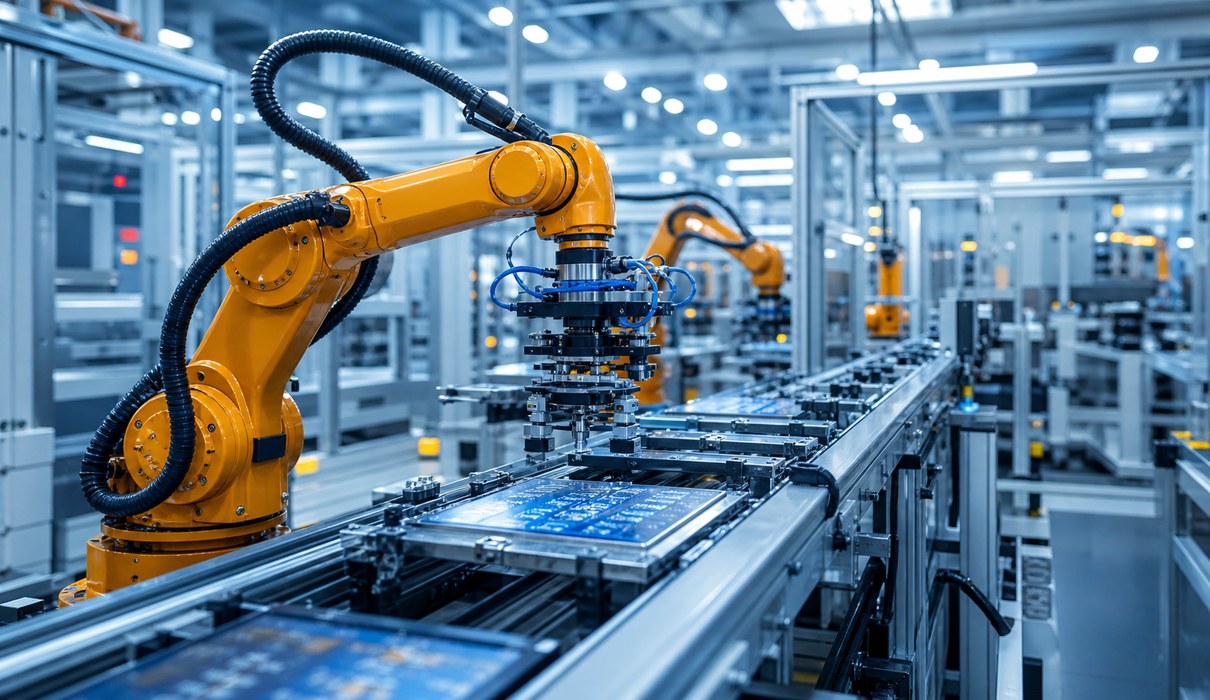
Malaysian manufacturing is in the middle of a quiet revolution. Across factories from the electronics hubs of Penang to the industrial estates of the Klang Valley, machines, robotics, and smart systems are changing how products are made. Industrial automation is no longer a luxury reserved for the largest multinationals; it is becoming a competitive necessity for manufacturers of every size. Here is how automation is transforming Malaysian manufacturing, and why it matters.
What industrial automation means
At its simplest, industrial automation is the use of machinery, control systems, and technology to perform tasks that would otherwise be done by hand. This ranges from a single automated machine on a production line to fully integrated smart factories where sensors, robotics, and software work together with minimal human intervention. The goal is to make production faster, more consistent, more efficient, and safer.
Driving efficiency and output
The most immediate impact of automation is on productivity. Automated systems can work continuously, performing repetitive tasks faster and more consistently than manual labour ever could. For Malaysian manufacturers competing in global markets, this boost in output and efficiency is crucial. It allows factories to produce more, meet larger orders, and respond quickly to demand without the delays and bottlenecks that come with purely manual processes.
Automation also supports economies of scale. As production volume rises, automated factories can keep the cost per unit low, which helps Malaysian products stay competitive on price in international trade.
Improving quality and consistency
Machines do not tire, lose concentration, or vary their technique. This makes automation exceptionally good at delivering consistent quality. Automated systems repeat the same precise actions every time, reducing errors and defects. For industries where precision is critical, such as electronics and medical devices, both important to Malaysia’s economy, this reliability is invaluable. Consistent quality builds trust with customers and protects a manufacturer’s reputation.
Enhancing safety
Many manufacturing tasks are dangerous, repetitive, or physically demanding. Automation can take over these jobs, removing workers from hazardous environments and reducing the risk of injury. Rather than simply replacing people, this often shifts workers toward safer, more skilled roles, overseeing and maintaining the automated systems rather than performing risky manual work themselves.
Addressing labour challenges
Like many economies, Malaysia faces labour challenges, including rising wages and a dependence on manual workers for certain industries. Automation offers a way to address these pressures by reducing reliance on large amounts of manual labour for repetitive tasks. This does not eliminate the need for people; rather, it changes the kind of work available, creating demand for skilled technicians, engineers, and operators who can run and maintain advanced systems. The shift encourages a more skilled, higher-value workforce.
The move toward smart manufacturing
Beyond individual machines, Malaysian manufacturing is increasingly embracing the ideas behind Industry 4.0, where automation combines with data, connectivity, and intelligent systems. Sensors gather data from across the factory, software analyses it, and systems adjust automatically to optimise production. This connected, data-driven approach allows manufacturers to spot problems early, reduce waste, predict maintenance needs, and continually improve their processes. The government and industry bodies have actively encouraged this transition, recognising that smart manufacturing is key to keeping the country competitive.
Challenges along the way
The transition is not without obstacles. Automation requires significant upfront investment, which can be difficult for smaller manufacturers. There is also a need for training and new skills, so that workers can operate and maintain advanced systems. Managing this change thoughtfully, investing wisely, and developing the workforce is essential to making automation succeed instead of just buying machines and hoping for the best.
Despite these challenges, the direction is clear. Manufacturers that embrace automation tend to become more productive, more competitive, and better positioned for the future, while those that resist risk falling behind.
Frequently asked questions
What is industrial automation?
Industrial automation is the use of machinery, control systems, and technology to perform manufacturing tasks with minimal human intervention, improving speed, consistency, efficiency, and safety.
Does automation cause job losses?
Automation changes the nature of work more than it simply eliminates it. While it reduces the need for repetitive manual labour, it increases demand for skilled roles such as technicians, engineers, and system operators, encouraging a more skilled workforce.
Why is automation important for Malaysian manufacturing?
It boosts productivity and quality, improves safety, helps address labour challenges, and keeps Malaysian manufacturers competitive in global markets, which is vital for an economy with a strong manufacturing base.
Stay informed on Malaysian industry
Industrial automation is reshaping the future of Malaysian manufacturing, and keeping up with these developments matters for anyone in the sector. Industrial.com.my offers guides, insights, and news on manufacturing, engineering, and industrial trends in Malaysia, helping businesses and professionals stay informed. To learn more, visit industrial.com.my.