
Denmark may be small, but it packs an extraordinary amount into its borders: fairy-tale castles, colourful harbours, world-class design, cosy cafes, and a way of life the Danes call hygge. Whether you are planning your first trip or returning for more, here are ten places in Denmark you should not miss.
1. Tivoli Gardens, Copenhagen
One of the world’s oldest amusement parks, Tivoli Gardens in the heart of Copenhagen is the most popular attraction in all of Denmark, drawing more than four million visitors a year. It blends old-world charm with thrilling rides, beautiful gardens, restaurants, and live concerts, and it transforms magically for Halloween and Christmas. It is said to have inspired Walt Disney, and it is easy to see why.
2. Nyhavn, Copenhagen
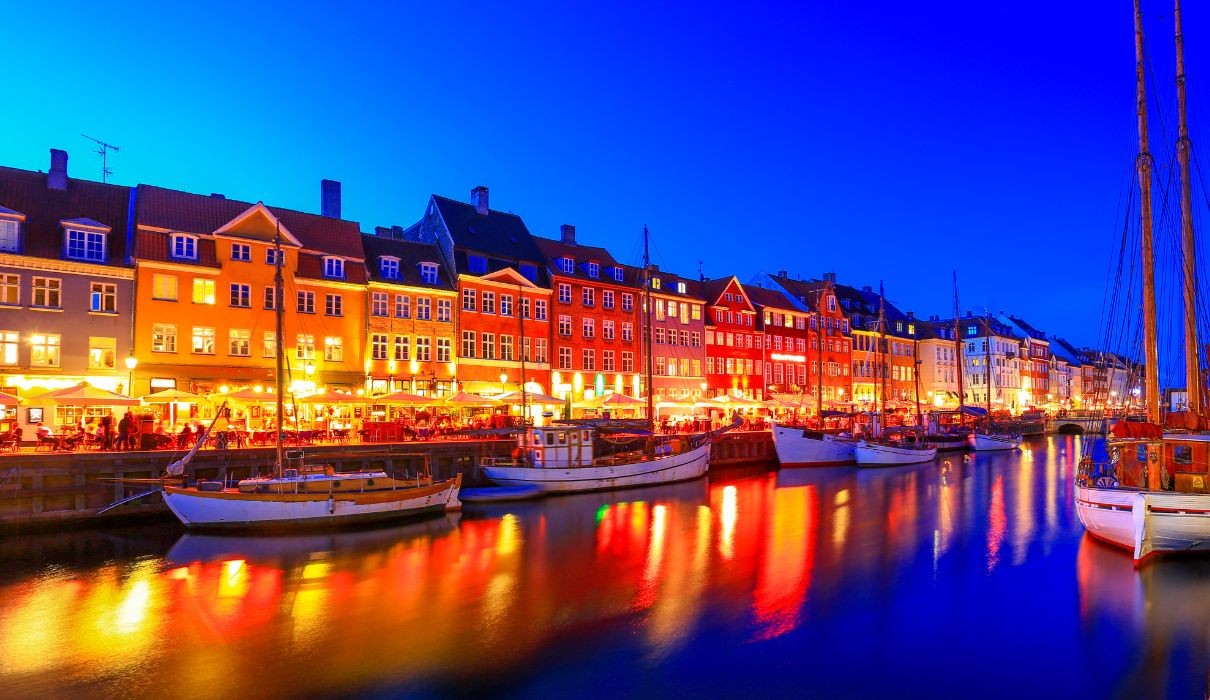
Nyhavn is the picture-postcard image of Copenhagen: a 17th-century canal lined with brightly coloured townhouses in ochre, crimson, and mustard, with old wooden ships moored along the quay. Dug as a commercial port in the 1670s, it is now one of the most photographed spots in Scandinavia. Stroll both sides, take a canal tour, and soak up the atmosphere, especially in the late afternoon.
3. The Little Mermaid, Copenhagen
Perched on a rock by the harbour since 1913, the Little Mermaid statue is inspired by Hans Christian Andersen’s famous fairy tale. She is famously small, just over a metre tall, and travellers often joke about how modest she is, yet she remains the single most recognisable image of Denmark and a must-see on any first visit.
4. The Round Tower, Copenhagen
Built in the 17th century, the Round Tower (Rundetaarn) is Europe’s oldest functioning observatory. Instead of stairs, a gentle spiral ramp winds to the top, where a viewing platform rewards you with a striking 360-degree view over Copenhagen. The easy climb makes it enjoyable for all ages.
5. Rosenborg Castle, Copenhagen
A Renaissance gem set in the lovely King’s Garden, Rosenborg Castle was built by King Christian IV in the early 17th century as a pleasure palace. Today it houses some of Denmark’s greatest cultural treasures, including the dazzling Danish crown jewels and royal regalia in its basement.
6. Christiansborg Palace, Copenhagen
Christiansborg is where Denmark’s government, monarchy, and judiciary meet, housing the parliament, the prime minister’s office, and the supreme court. With over 800 years of history beneath it, including ancient ruins you can explore, it is one of Copenhagen’s most significant landmarks, and the tower offers free city views.
7. Amalienborg Palace, Copenhagen
The home of the Danish royal family, Amalienborg consists of four elegant palaces arranged around a square. Time your visit for the daily changing of the royal guard, a colourful ceremony that draws visitors throughout the year, and admire the striking modern Opera House across the water.
8. Kronborg Castle, Helsingor
A short trip north of Copenhagen brings you to Kronborg, the grand Renaissance castle made famous as the setting of Shakespeare’s Hamlet. A UNESCO World Heritage site, it sits dramatically on the coast guarding the narrow sound between Denmark and Sweden, and it is one of the country’s most atmospheric historic sites.
9. A Danish canal tour
One of the best ways to experience Copenhagen is from the water. A canal tour glides past the Opera House, the Black Diamond library, the Little Mermaid, and the cosy canals of Christianshavn, lined with houseboats and old buildings. It is a relaxing way to see many of the city’s icons in one trip and to appreciate its maritime character.
10. Tasting smorrebrod and Danish food
No visit to Denmark is complete without trying smorrebrod, the classic Danish open-faced sandwich piled with toppings. Sampling it at a traditional restaurant is a delicious way to experience Danish food culture, and it pairs perfectly with the country’s love of cosy, unhurried dining. Take your time over a meal, watch the harbour life go by, and you will understand why food is such a central part of the Danish experience.
Frequently asked questions
How many days do you need in Denmark?
For Copenhagen alone, three full days is a comfortable minimum to see the highlights without rushing. Five to seven days lets you add day trips such as Kronborg Castle and explore the city’s neighbourhoods at a relaxed pace.
Is Copenhagen easy to get around?
Yes. The city is compact and walkable, famously bike-friendly, and served by a clean, efficient, fully automated metro and integrated public transport, so getting between attractions is easy.
Do people in Denmark speak English?
English is very widely spoken in Denmark, especially in Copenhagen, so travellers generally have no difficulty communicating in English.
Plan your Danish adventure
Denmark offers a wonderful mix of history, design, and cosy charm, and these ten places are the perfect starting point. For more travel inspiration, guides, and practical information to help you plan your trip, visit denmark.com.my and start mapping out your Danish adventure.