
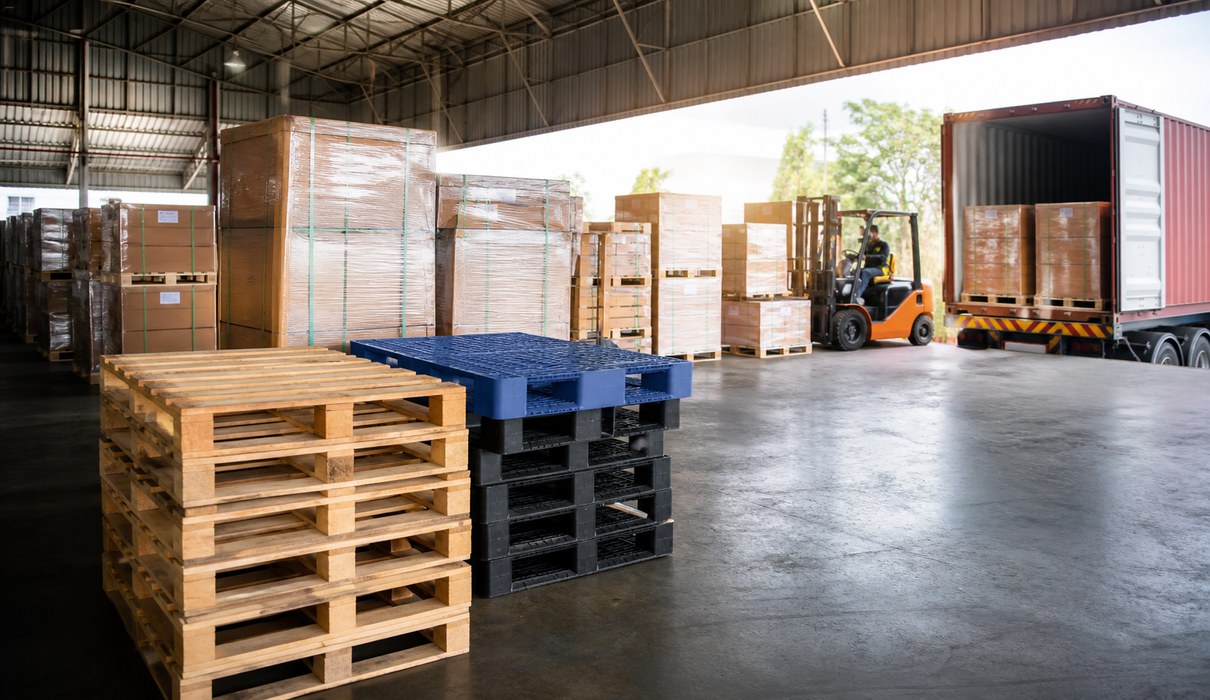
It is easy to overlook the humble pallet. Flat, sturdy, and stacked quietly in the corner of every warehouse, it rarely gets much attention. Yet without pallets, the modern transportation and logistics industry would grind to a halt. From the factory floor to the retail shelf, pallets are the unsung workhorses that make it possible to move goods quickly, safely, and affordably.
The backbone of modern logistics
A pallet is a flat platform used to carry goods so they can be lifted and moved as a single unit. That simple idea transformed the way the world moves products. Before pallets became standard, goods were loaded and unloaded piece by piece, a slow and labour-intensive process. The pallet allowed forklifts and pallet jacks to move large quantities in one motion, cutting loading times dramatically and making large-scale distribution practical.
Today, pallets are the foundation of nearly every supply chain. Manufacturers stack their products on them, warehouses store goods on them, lorries and containers are loaded with them, and retailers receive deliveries on them. The pallet is the common unit that ties the whole journey together, allowing goods to flow smoothly from one stage to the next.
Speed and efficiency
The biggest advantage pallets bring is speed. A forklift can move a fully loaded pallet in seconds, a task that would take several workers many minutes to do by hand. Across a busy warehouse or port handling thousands of shipments, that time saving is enormous.
Pallets also standardise handling. Because goods are grouped into uniform loads, equipment, racking, lorries, and containers can all be designed around predictable pallet sizes. This standardisation makes the entire logistics system more efficient, reducing delays and allowing operations to scale up without chaos.
Protecting goods in transit
Beyond speed, pallets protect the products they carry. By lifting goods off the ground, they keep them away from moisture, dirt, and pests on warehouse and lorry floors. A well-stacked and secured pallet load is much more stable than loose boxes, reducing the risk of items shifting, toppling, or being crushed during transport.
This protection matters financially. Damaged goods mean lost stock, refunds, and unhappy customers. By keeping loads stable and off the ground, pallets reduce damage and the costs that come with it, which is one reason businesses treat them as essential rather than optional.
Saving money across the supply chain
Pallets save money at every stage. Faster loading and unloading reduces labour costs. Standardised loads make better use of space in warehouses and vehicles, lowering storage and transport costs per unit. Less product damage means fewer losses. And because pallets can often be reused or repaired many times, they offer good value over their working life.
For businesses that ship in volume, these savings are significant. The cost of the pallets themselves is small compared to the efficiency they unlock across the whole operation.
Different pallets for different needs
Not all pallets are the same, and choosing the right type matters. Wooden pallets are the most common, valued for their strength, repairability, and low cost. Plastic pallets are lighter, hygienic, and long-lasting, making them ideal for industries with strict cleanliness requirements or for closed-loop systems where pallets are reused repeatedly. There are also specialised options such as export pallets, heavy-duty pallets, and custom sizes built for particular loads.
The right choice depends on the goods being moved, the conditions they face, whether the pallets stay within a closed system or leave with the shipment, and the budget. A reliable pallet supplier can advise on the best option for each situation.
Why supply reliability matters
Because pallets are so central to logistics, running short of them can stall an entire operation. Goods cannot be shipped if there is nothing to load them onto. This is why businesses value a dependable pallet supplier who can provide the right pallets in the right quantities, consistently and on time. A steady supply keeps the warehouse moving and the shipments flowing.
Frequently asked questions
Why are pallets so important in logistics?
Pallets allow goods to be moved as single units by forklift, which dramatically speeds up loading and unloading, protects products, and standardises handling across the whole supply chain.
How long do pallets last?
It depends on the material and how they are used. Wooden pallets can be repaired and reused many times, while plastic pallets are very durable and well suited to repeated use in closed-loop systems.
What is the difference between wooden and plastic pallets?
Wooden pallets are strong, repairable, and economical. Plastic pallets are lighter, more hygienic, and longer-lasting, but usually cost more upfront. The best choice depends on your goods and how the pallets will be used.
A dependable pallet partner
For any business that moves goods, having a reliable source of quality pallets is essential to keeping operations running smoothly. Pallets.my supplies wooden and plastic pallets for transportation, warehousing, storage, and export, helping businesses across Malaysia keep their supply chains moving. Whether you need standard pallets, export pallets, or custom sizes, working with a dependable pallet supplier means one less thing to worry about, so your goods keep flowing from factory to customer without interruption. To learn more, visit pallets.my.