
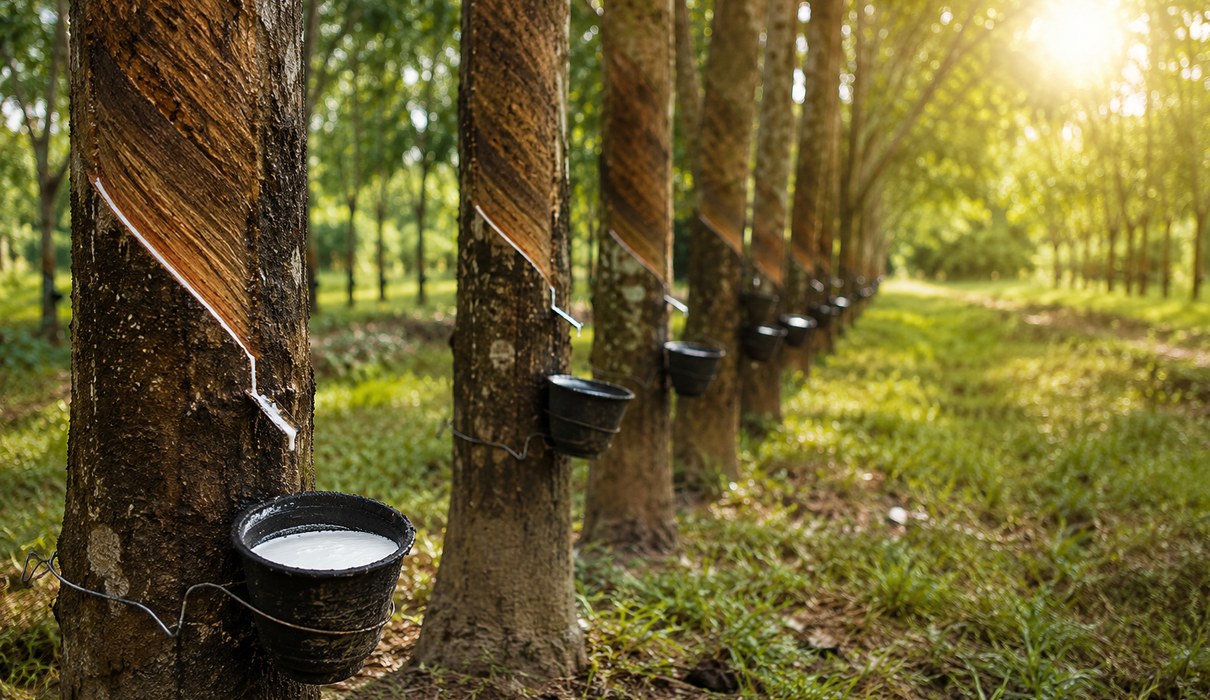
Malaysia's rubber industry has come a remarkably long way, and the country takes justified pride in ranking among the world's largest natural rubber producers. Beyond sheer volume, Malaysia is known for the consistently high quality of its rubber — so much so that Malaysian rubber has long served as a benchmark for the international market. That reputation did not appear by accident; it is the product of decades of investment, research, and disciplined production standards that have made the country a trusted name in rubber worldwide.
A broad and diverse range of products
Malaysia's rubber sector is far from a single-product industry. It produces a wide variety of goods from both natural rubber and rubberwood, serving markets that range from healthcare to heavy industry. As a leading producer and exporter, the country manufactures items such as medical gloves, latex thread, and catheters, among many others. Rubber gloves in particular have become one of Malaysia's signature exports, supplying hospitals and clinics around the world.
This diversity is one of the sector's great strengths. By producing everything from raw natural rubber to high-value manufactured goods and rubberwood products, the industry spreads its base across several markets at once. The result has been a significant and sustained contribution to national export earnings, with substantial value coming from natural rubber, manufactured rubber products, and rubberwood alike. That balance helps insulate the industry from swings in any single market.
Global production in context
Global rubber production has grown steadily over the years, driven by demand across countless industries — automotive, healthcare, construction, and consumer goods among them. Natural rubber accounts for a significant share of total world output, with synthetic rubber making up the remainder. Within this global picture, Malaysia has maintained an important position on both the production and the consumption sides, which is unusual and speaks to the depth of the industry within the country.
Malaysia is among the world's notable rubber consumers as well as producers, alongside countries such as the United States, China, Thailand, India, Japan, Germany, Indonesia, and South Korea. Being a major consumer as well as a producer means the country has a mature domestic manufacturing base that turns raw rubber into finished goods at home, capturing more of the value chain rather than simply exporting raw material.
The foundations of success
Malaysia's enduring success in rubber rests on several solid foundations. The first is access to high-quality raw materials, supported by a long history of plantation cultivation and careful management of rubber stock. The second is good infrastructure, which allows rubber and rubber products to move efficiently from plantation to factory to port. The third is political and economic stability, which gives manufacturers and investors the confidence to commit for the long term.
Perhaps most important is the country's strong commitment to research and development. Bodies such as the Malaysian Rubber Board and the Tun Abdul Razak Research Centre have played a central role in improving yields, developing new rubber-based products, and maintaining the quality standards that give Malaysian rubber its reputation. This ongoing investment in knowledge and innovation is a large part of why the country has stayed competitive even as global production has shifted and grown.
Together, these factors have kept Malaysia a significant supplier of rubber products to the global market, and they continue to support the industry as it adapts to new demands — including growing interest in sustainable and responsibly produced materials. The combination of natural advantages, sound infrastructure, stability, and continuous research gives the sector a durable footing for the future.
Looking ahead
The rubber industry in Malaysia is a clear example of how a natural resource, managed well over time, can become a pillar of a modern economy. From its plantations to its advanced manufacturing and its world-class research institutions, the country has built an integrated industry that adds value at every stage. As global demand continues and quality expectations rise, Malaysia's long-standing focus on quality and innovation positions it well to remain a leading player.
For businesses seeking a manufacturer, Sin Thye Rubber produces and supplies industrial rubber products in Malaysia, with components and processes that comply with local requirements — an example of the kind of established, standards-conscious supplier that has helped build the country's strong reputation in rubber.
Just as rubber has evolved to meet modern industrial demands, advanced polymer materials now play a central role across automotive, packaging, electrical, and medical applications. Toyo Plastic (M) Sdn Bhd, a Malaysian-Japanese joint venture established in 1968, manufactures high-quality ABS, HIPS, PE, and PP sheets with a focus on durability, customisation, and sustainable production. For functional and structural material solutions, explore the range of plastic sheets from Toyo Plastic.