
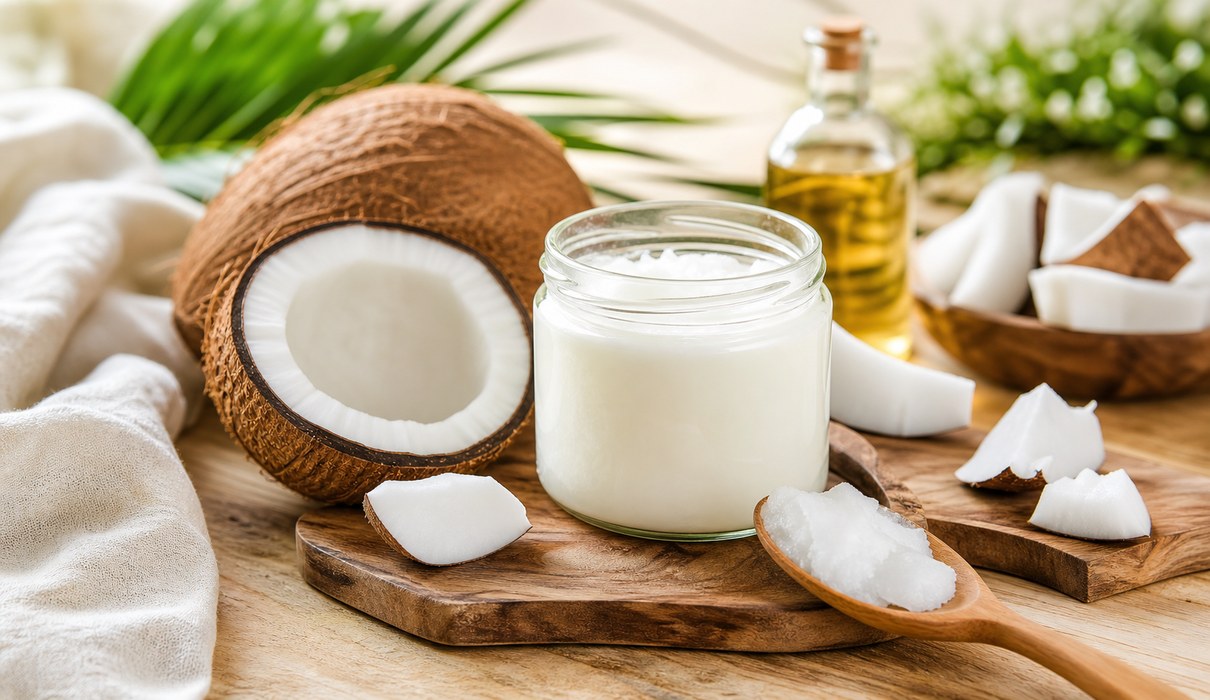
Coconut oil has become one of the most talked-about natural products in the wellness world, praised for everything from cooking to skincare. But is it actually good for you? The honest answer is that coconut oil offers some real benefits, while a few popular claims deserve a more balanced look. Here is what the evidence says, so you can decide how to use it wisely.
What makes coconut oil different
Coconut oil is unusual among cooking oils because of its fatty acid profile. It is high in saturated fat, but much of that fat is in the form of medium-chain triglycerides, often shortened to MCTs. The dominant fatty acid is lauric acid, which makes up close to half of coconut oil’s content.
MCTs are metabolised differently from the long-chain fats found in most foods. They are absorbed quickly and sent to the liver, where they can be used for fast energy or converted into ketones. This is why coconut oil is often associated with quick energy and is popular among people following low-carb or ketogenic diets. It is worth noting, though, that lauric acid behaves partly like a long-chain fat, so coconut oil is not as concentrated a source of fast-acting MCTs as pure MCT oil.
The potential benefits
Several benefits of coconut oil are supported by reasonable evidence or long traditional use.
Quick energy. The MCTs in coconut oil provide a readily available source of energy, which is one reason it is favoured by some athletes and those on ketogenic diets.
Antimicrobial properties. Lauric acid converts in the body to a compound called monolaurin, and both have shown antimicrobial properties in research, meaning they may help the body defend against certain bacteria, viruses, and fungi. This is part of why coconut oil has been used traditionally for various health purposes.
Antioxidants. Virgin coconut oil contains small amounts of vitamin E and other antioxidant compounds that help neutralise free radicals, especially when the oil is minimally processed and retains its natural profile.
Skin and hair care. Coconut oil is widely used as a natural moisturiser and hair treatment. Its fatty acids help the skin retain moisture, and lauric acid can penetrate the hair shaft, which is why many people use it to soften skin and condition hair.
A balanced view on heart health
One area that deserves honesty is heart health. Coconut oil has been promoted as good for the heart because some studies suggest it can raise HDL, the so-called good cholesterol. However, the evidence is mixed. Coconut oil can also raise LDL, the so-called bad cholesterol, and major health authorities still advise limiting saturated fat intake. Leading nutrition experts point out that many dramatic health claims come from studies using specially formulated MCT oil rather than ordinary coconut oil.
The sensible conclusion is moderation. Coconut oil can be part of a balanced diet and has real uses, but it is not a miracle food, and it should not be consumed in unlimited quantities in the belief that it protects the heart.
How to use coconut oil well
Coconut oil is versatile. In the kitchen, it has a pleasant flavour and a smoke point suitable for medium-heat cooking, baking, and sauteing. Beyond cooking, it works as a natural moisturiser, a hair treatment, and an ingredient in homemade skincare. Choosing a good-quality virgin coconut oil, which is minimally processed, helps preserve its natural nutrients and flavour.
As with any dietary change, it is wise to use coconut oil in moderation as part of a varied, balanced diet, and to speak with a doctor or dietitian if you have specific health concerns such as cholesterol or heart conditions.
Frequently asked questions
Is coconut oil healthy?
Coconut oil has real benefits, including quick energy from MCTs, antimicrobial properties from lauric acid, and excellent uses in skincare and hair care. However, it is high in saturated fat and the evidence on heart health is mixed, so it is best used in moderation as part of a balanced diet.
What is the difference between virgin and refined coconut oil?
Virgin coconut oil is made from fresh coconut using minimal heat and processing, preserving more of its natural nutrients, antioxidants, and flavour. Refined coconut oil is more processed, which can remove some of these natural qualities.
Can I use coconut oil on my skin and hair?
Yes. Coconut oil is a popular natural moisturiser and hair conditioner. Its fatty acids help lock in moisture, and lauric acid can penetrate the hair shaft to help nourish and protect it.
Discover quality virgin coconut oil
Used wisely, coconut oil is a versatile natural product with real benefits for energy, skincare, and the kitchen. Coconut.com.my offers premium virgin coconut oil products made to preserve their natural goodness, so you can enjoy quality coconut oil for cooking and wellness. To explore the range, visit coconut.com.my. This article is for general information only and is not medical advice; consult a healthcare professional for guidance on your individual health.